Mintscan: A Beginner’s Guide to Exploring Cosmos Network Data.
If you’re using DeFi or wallets connected to Cosmos-based chains, sooner or later you’ll want to answer simple questions like: Where is my transaction status? Who validated this block? Why did my stake or governance action behave the way it did?
That’s where Mintscan comes in.
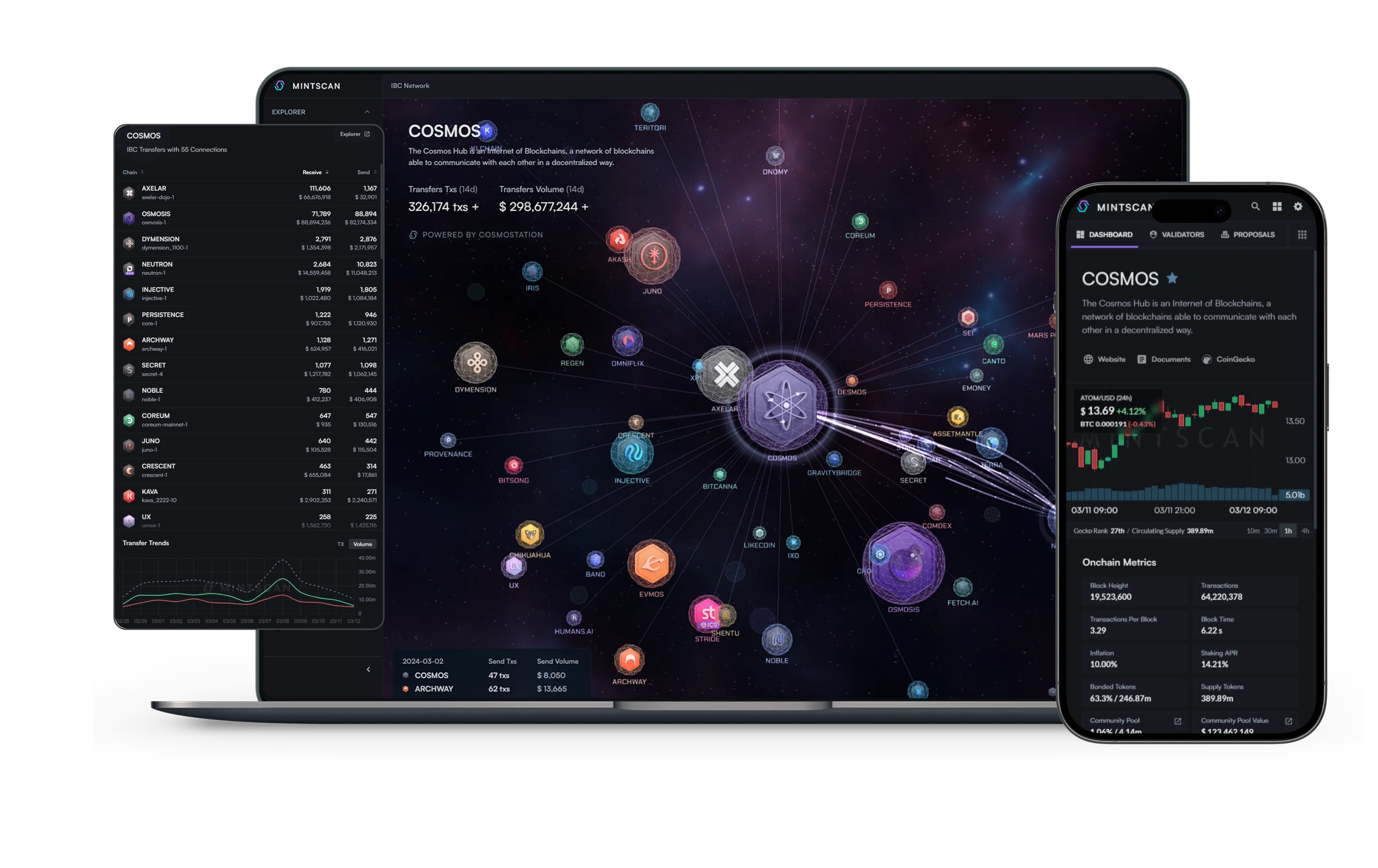
Mintscan is a popular block explorer and analytics dashboard for many Cosmos (and Cosmos-SDK based) networks. It helps users and developers view on-chain information such as accounts, transactions, validators, staking activity, and governance proposals—without having to manually decode raw blockchain data.
This article is a unique, beginner-friendly guide to Mintscan: what it is, what you can do with it, how to use it step by step, and what to watch out for.
1) What Is Mintscan?
Mintscan is a web-based tool used to explore blockchain data for Cosmos ecosystems. In simple terms, it’s similar to how other networks have block explorers—but it’s tailored to the Cosmos world, where concepts like validators, staking, and governance are central to how the network works.
Instead of only showing basic blocks and transaction hashes, Mintscan typically makes it easier to:
- search wallet addresses
- view transaction history
- inspect validators
- understand staking details
- check governance proposals and voting
- track network activity in a human-readable way
Because Cosmos chains often use the same software family (Cosmos-SDK), Mintscan can present many related features in a consistent layout across different networks.
2) Why People Use Mintscan
Most beginners start with one goal: transaction confirmation and troubleshooting.
Common reasons users open Mintscan
- Verify a transaction after sending tokens
- Check whether a transaction succeeded or failed
- Look up fees, memo fields, and timestamps
- Confirm whether staking operations (delegate/undelegate/withdraw) actually processed
- Explore validator details to understand reliability and performance
- Monitor governance proposals, especially if you’re staking and voting
For developers and advanced users
- Debugging issues related to signatures and transaction messages
- Auditing events like delegation changes
- Reviewing governance participation and proposal outcomes
In short: Mintscan reduces confusion. Instead of relying on guesswork or wallet notifications, you can inspect what happened on-chain.
3) Mintscan vs. Other Block Explorers
To avoid confusion, it helps to understand that not every block explorer is equally good for every blockchain concept.
Typical differences you may notice
- Cosmos-specific features: Mintscan often highlights staking and governance data clearly.
- Human-friendly layout: addresses, validators, and proposals are easier to browse.
- Chain coverage: Mintscan may support multiple Cosmos networks, but not necessarily every chain or every feature at all times.
Other explorers may show transactions and blocks, but Mintscan tends to focus more on the Cosmos “ecosystem experience.”
4) Key Features You’ll Use Most Often
Even without knowing technical details, Mintscan is designed around the main actions Cosmos users perform.
A) Account / Wallet Search
You can enter a wallet address to see:
- transaction history
- balances (depending on the chain and indexer setup)
- activity over time
B) Transaction Details
For any transaction hash, you can see:
- status (success/failure)
- the block/time it was included
- fees
- messages included in the transaction (e.g., send, delegate, vote)
C) Validator Information
Cosmos networks use validators to secure the chain and process consensus. Mintscan helps you view:
- validator identity and website links (if provided)
- commission and performance data (where available)
- delegation totals
- uptime and other metrics (varies by chain)
D) Staking & Delegations
For delegators, Mintscan often shows:
- your delegation amounts (if indexed)
- redelegations/undelegations
- reward-related info (again depending on chain data availability)
E) Governance Proposals
On many Cosmos chains, governance is core. Mintscan typically lets you view:
- proposal titles and descriptions
- voting periods
- vote tallies
- how individuals voted (depending on indexing)
5) How to Use Mintscan Step-by-Step
This section is written like a checklist. Follow it each time you need to verify something.
Step 1: Choose the Right Network
Cosmos ecosystems can include multiple chains (different networks). The first thing to confirm is that you’re looking at the correct network in Mintscan.
If you don’t select the correct chain, searches may show nothing—or worse, confusing results.
Step 2: Search for Your Wallet Address
Go to the Mintscan search bar and paste your wallet address.
Look for:
- transaction list
- transaction count
- recent activity
If you don’t see expected transactions, it might be due to:
- wrong network
- wrong address (very common)
- the transaction hasn’t fully indexed yet
Step 3: Open the Transaction Hash
Click the transaction entry you care about.
Now verify:
- Status (successful or failed)
- Block time (when it was included)
- Fee paid
- Messages (what actions were actually executed)
If the transaction failed, the details usually include an error explanation (for example, insufficient funds or an invalid message).
Step 4: Confirm Staking Operations (If You Delegated/Undelegated)
If your action involved staking, look for the specific messages inside the transaction:
- delegation (delegate)
- undelegation (undelegate)
- reward withdrawals (withdraw rewards)
- redelegation (redelegate)
Then check whether your balances/delegations changed in the direction you expected.
Important: Cosmos staking can involve unbonding periods. A transaction may succeed, but your stake might not be immediately withdrawable.
Step 5: Verify Validator Information
If you’re staking, check the validator page:
- commission rate
- identity and website
- performance metrics (where available)
This doesn’t guarantee safety, but it helps you avoid blindly trusting any validator.
Step 6: Check Governance Proposals and Voting
If your wallet is used for governance (common for stakers), you can look up proposals and confirm:
- vote start/end
- how the community voted
- whether your vote appears (if indexed)
6) Understanding Transaction Status: Success vs. Failure
One of the most useful parts of Mintscan is the ability to distinguish between:
- Successful transactions: included in a block and executed properly
- Failed transactions: included but returned an error
If a transaction fails, it’s rarely “lost.” Instead, it usually means the chain rejected it due to something like:
- insufficient balance for fees
- invalid parameters (wrong amounts, wrong validator address, etc.)
- contract/state mismatch (for some advanced interactions)
A key beginner habit: if you get an error, don’t just try again blindly—use Mintscan to understand why.
7) Fees, Gas, and Practical Costs
Crypto on Cosmos chains often uses a fee model based on:
- gas estimates
- gas price (network-specific)
- transaction size/complexity
Mintscan can show the fee and gas usage fields (depending on the chain’s explorer indexer). For beginners, the practical takeaway is:
- If you see a transaction fail due to fees, check your wallet balance for both the transfer amount and the fee.
- If you do staking actions, remember fees may vary slightly between transaction types.
Always treat “fee transparency” as a strength of on-chain explorers: you should be able to verify what you paid and what you signed.
8) Common Beginner Mistakes When Using Mintscan
Even simple explorers can confuse people at first. Here are mistakes to watch for:
Mistake 1: Wrong network selection
You searched a wallet on the wrong chain. Always verify the chain first.
Mistake 2: Using an incorrect address
Copy/paste errors happen constantly. Double-check the address starts with the correct prefix format used by that chain.
Mistake 3: Expecting instant unstaking
Cosmos staking often uses an unbonding period. Your “undelegate” transaction can be successful, but your funds may remain locked until the period ends.
Mistake 4: Confusing “transaction included” with “final effect”
Sometimes the blockchain includes your transaction, but the economic effect (like validator rewards distribution) may appear later.
Mistake 5: Assuming indexing is instant
Explorers index data. There can be short delays between the chain processing the tx and Mintscan showing it.
9) Safety Tips When Checking Mintscan
Mintscan itself is a viewer, but safety matters when you’re interacting with wallets and links.
Security best practices
- Verify you’re on the real Mintscan site (avoid fake lookalikes).
- Don’t connect your wallet to random third-party pages claiming to “improve Mintscan.”
- Never share your seed phrase (seed phrases are for you only).
- Use transaction hashes from your wallet/app, not from social media.
Also remember: a block explorer is not a guarantee of safety. It shows what happened on-chain, but it can’t stop scams that happen before a transaction is created.
10) Who Should Use Mintscan?
Mintscan is helpful for:
- Beginners learning how Cosmos transactions work
- Stakers monitoring delegations and unbonding
- Governance participants tracking proposals and votes
- DeFi users verifying swaps, transfers, and contract interactions (if indexed)
- Developers debugging transaction content and on-chain messages
If you’ve ever wondered “Did my transaction really go through?” Mintscan is often the fastest answer.
Conclusion: Mintscan Makes Cosmos On-Chain Data Understandable
Mintscan helps you explore Cosmos network activity in a structured, beginner-friendly way. Instead of guessing, you can verify:
- whether a transaction succeeded,
- what fees were paid,
- what actions were executed,
- details about validators,
- and governance proposal outcomes.
For Cosmos users, Mintscan isn’t just a tool—it’s a way to build confidence by confirming real blockchain results.
FAQ
1) What is Mintscan?
Mintscan is a block explorer and analytics website for Cosmos-based networks. It helps users search wallet addresses, view transaction history, inspect staking/validator details, and check governance proposals and voting activity.
2) What can I do with Mintscan?
You can typically:
- look up transactions by hash,
- check the status (success/fail),
- view block/time and fees,
- search validators,
- track staking-related actions (delegate/undelegate/rewards—if indexed),
- and browse governance proposals.
3) How do I find my transaction on Mintscan?
Copy your transaction hash from your wallet/exchange app, then paste it into Mintscan’s search bar. If you only have your wallet address, you can search the address and open the relevant transaction from the list.
4) Why isn’t my transaction showing up yet?
Common reasons:
- you’re on the wrong network/chain in Mintscan,
- the address/tx hash is incorrect,
- the transaction has not been indexed yet (explorers can lag briefly),
- or the explorer is experiencing indexing delays.
5) My transaction shows “failed”—does that mean my funds are gone?
Usually no. A failed transaction generally means the chain rejected your action (for example, invalid data or insufficient balance for fees). Your tokens typically remain available—though fees might still apply depending on how the failure occurred. Always check the transaction details for the error message.
6) What’s the difference between a successful transaction and the “effect” I expected?
A transaction can be included on-chain successfully, but some outcomes (like staking reward changes or unbonding availability) may appear later due to protocol timing. Also, rewards distribution schedules can make it look delayed even when actions were accepted.
7) Can Mintscan show my staking rewards?
Often yes, but it depends on the specific chain and how indexing is configured. Some networks show delegation and reward-related details more clearly than others. If your rewards aren’t visible, it may be indexing-related or the chain may track rewards differently.
8) How do I check validator information on Mintscan?
Open the validator page from the staking section or search the validator name/address. There you can view details such as commission rate, performance/uptime (depending on the chain), and sometimes links to the validator’s identity/website.
9) Is Mintscan safe to use?
Mintscan is a read-only explorer, so it shouldn’t directly move your funds. However, you should be cautious about fake sites and phishing links. Verify the domain you’re using and avoid entering your seed phrase anywhere.
10) Why does Mintscan show different numbers than my wallet?
Differences can happen due to:
- indexing delays (explorer not updated yet),
- different rounding/formatting,
-
or wallet implementations showing values using a slightly
different method.
Wait a bit and re-check later if something looks off.
If you want, tell me which Cosmos chain(s) your article focuses on (e.g., Cosmos Hub, Osmosis), and I can rewrite these FAQs with chain-specific terms like delegation, unbonding, and governance fields that match that network’s Mintscan layout.